
LEVEL 2 ASP 4869 — AUSGRID + ENDEAVOUR
Underground power and service connections across Sydney.
A new build that needs a fresh connection, an old overhead service you want gone, or consumer mains to run from the street to a switchboard 40 metres back. We dig the trench to network depth, lay the conduit and cable, build the pit, lodge every approval and energise. Call 1300 58 58 16.
Level 2 ASP 4869 — Ausgrid + Endeavour accredited
Every network approval lodged by us
200A and greater connections
Sydney metro, Hills, Hawkesbury, Blue Mountains
01
From the street to your switchboard, dug and connected by one accredited crew
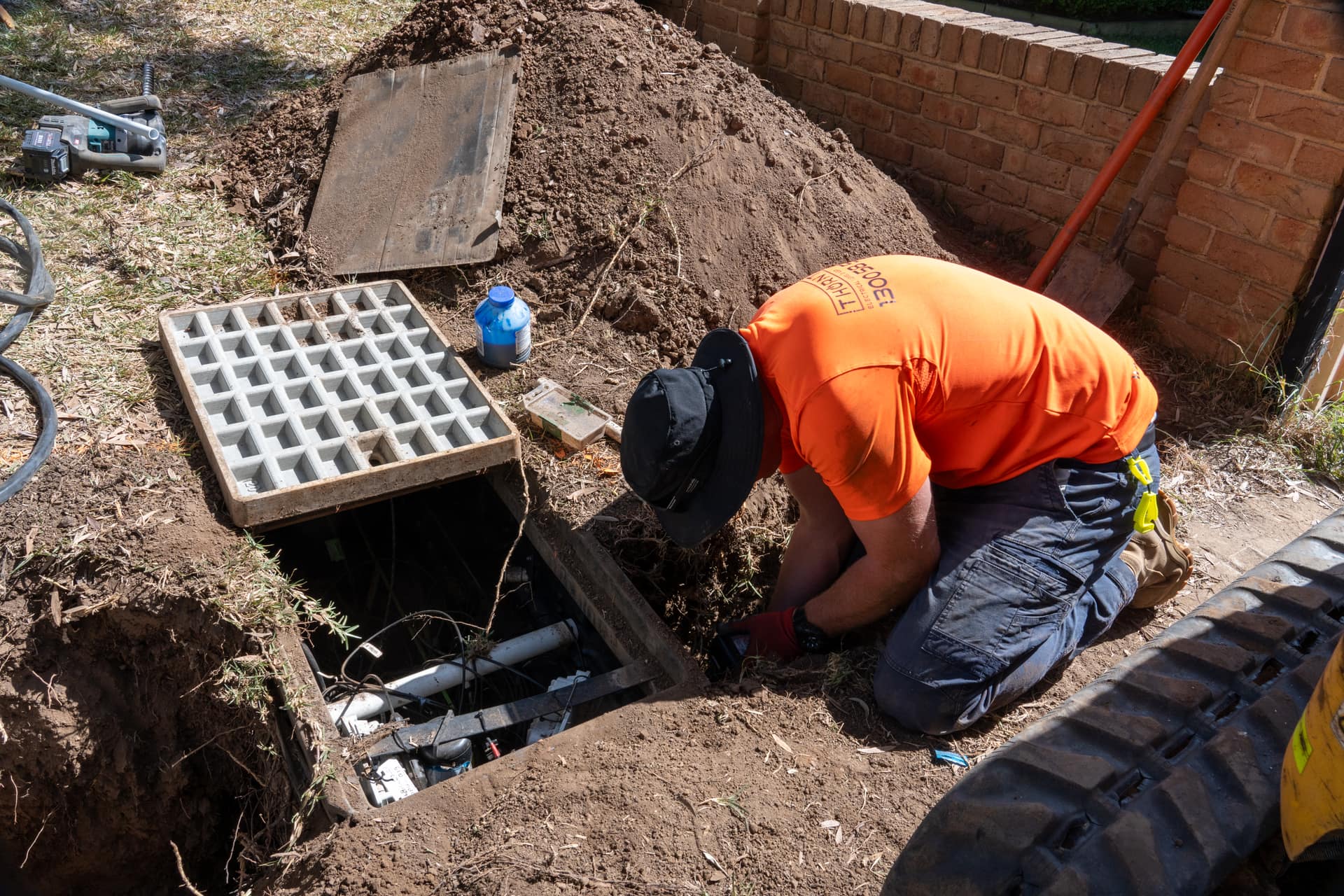
An underground supply runs from the network's point of supply, a street pillar, pit or the base of a pole, through buried conduit into your consumer mains and on to the switchboard. As a Level 2 ASP, we do the whole job:
- Set out and dig the trench to network depth
- Bed the conduit on sand with marker tape over it
- Draw the cable and build the pit where the run needs one
- Terminate both ends and energise
- Lodge every network approval and the compliance certificate
02
New connections for new builds, duplexes and townhouses
A new home, duplex or townhouse needs its permanent underground supply before occupation. Where the street is already underground, supply comes off a street pillar.
- Dig from the pillar to the meter position
- Lay conduit and consumer mains at the correct depth
- Terminate and lodge the connection
- Work to the builder's program, around the slab and driveway
03
Overhead to underground conversion (UGOH)
Converting an overhead service to underground, also known as a UGOH, for a new roofline, a knockdown rebuild or after storm damage, is a Level 2 ASP job.
- Disconnect at the pole
- Trench to the building, run conduit and cable
- Terminate, test and energise the switchboard
- Strip the old aerial hardware off the wall
Get a free site inspection or call 1300 58 58 16.
04
Long runs, voltage drop and upsized consumer mains
The further the switchboard sits from the street, the more cable size matters. On long runs, undersized cable causes voltage drop under load.
- Size the consumer mains for the real length and load
- Allow for ducted air, a pool or an EV charger
- Set draw pits at the bends
- Leave room in the conduit to upgrade later
05
Trenching, pits, conduit and a tidy reinstatement
The underground work is judged on what you cannot see once it is backfilled: correct depth and cover, conduit bedded in sand, marker tape, compacted backfill and the surface reinstated neatly.
We work in clean, stable ground. If we strike contaminated soil, uncontrolled fill or asbestos material, we stop and flag it so licensed people handle it before any cable goes in.
06
Across Sydney — Ausgrid and Endeavour, both networks
Thorntek is a Level 2 ASP accredited with both Ausgrid and Endeavour Energy, covering overhead, underground and metering. Whether it is a new connection or an overhead to underground conversion, we lodge every approval.
07
What we bring to an underground job
Excavation gear sized for the block, conduit and pits in both network specs, mains cable in the gauges the networks accept, and the test instruments to prove the board before it goes live.
Before we leave you have the compliance certificate, the network lodgement and photos of the open trench on file.
Get a free site inspection or call 1300 58 58 16.
Common questions.
What does converting an overhead service to underground involve?
We disconnect the overhead service at the pole, trench from the pole base or the nearest network pit to your building, lay conduit and cable underground, terminate into the switchboard, test and energise, then remove the old aerial service and the point of attachment hardware off the wall. It's all done by Thorntek as the accredited Level 2 ASP, and we lodge the network approval and the compliance certificate. Most domestic conversions are a one to two day job depending on the run length and the surface we have to reinstate.
How deep does the cable have to be buried?
The network sets a minimum depth and cover for the trench, and it varies with where the run goes — under a garden bed is different to under a driveway, which needs deeper cover and often a heavier conduit. We dig to the right depth for each section, bed the conduit in sand, and lay orange marker tape above it so anyone digging there later gets a warning before they reach the cable. The depth gets recorded in the photos we send you before the trench is backfilled.
Do you do the trenching and put the ground back, or just the electrical?
Both. We set out and dig the trench, lay the conduit and cable, build any pits, backfill in compacted layers, and reinstate the surface — concrete, pavers or turf — so it reads as a finished job. We work in clean, stable ground; if we strike contaminated soil, uncontrolled fill or asbestos material we stop and flag it, because that has to be handled by the right licensed people before cable goes in.
I'm building a new home. When do I need the underground connection arranged?
Get it on the radar early. The permanent underground supply needs to be in before occupation, and the trench and conduit are easiest to run before the driveway and landscaping go in. Thorntek works to your builder’s program, coordinates around the slab and the meter position, lays the conduit and consumer mains at the right depth, builds the service pit and lodges the new connection so the supply is ready when the trades need it.
Do you do underground work on both Ausgrid and Endeavour networks?
Yes. Level 2 ASP 4869 covers underground, overhead and metering across both Ausgrid (Sydney CBD, Eastern Suburbs, Inner West, North Shore and Northern Beaches) and Endeavour Energy (the Hills, Greater Western Sydney, Penrith, South Western Sydney, Hawkesbury and the Blue Mountains). One accredited contractor for the full underground scope, every approval lodged by us.
Can you run an underground supply to a granny flat or second dwelling?
Yes. A secondary dwelling, granny flat or studio usually needs its own supply or a properly sized sub-main run underground from the main switchboard. We size the cable for the distance and the load, trench and lay the conduit, set a pit if the run needs one, terminate into a sub-board, and test and certify it. If the second dwelling needs its own metered connection from the network rather than a sub-main, we handle that as a new connection and lodge it.
How long will the power be off for an underground job?
For a straight overhead to underground conversion, the supply is only off for the changeover window — once the trench, conduit and cable are in and tested, we isolate at the pole, terminate the new underground run, and bring you back on, usually inside the same day. New connections on a build are energised once, so there’s no existing supply to interrupt. For anything involving a switchboard upgrade at the same time we quote the outage window upfront so you can plan around it.
How much does an underground service connection cost?
Every underground job starts with a free site inspection, because the price turns on the run length, the depth, the surface we have to dig through and reinstate, and the cable size the load needs. You get a fixed-price quote in writing before any work begins, with no surprises on the invoice. Tell us where the switchboard is and where the supply comes in, or call 1300 58 58 16 to book the inspection.
Talk to Thorntek
Get a free site inspection
Phone answered 24/7 by the team that does the work. Quotes free across Sydney metro.